The Colossi of Memnon at a glance
Luxor is ancient Thebes. Karnak and Luxor Temple stand on the East Bank, while the necropolises and mortuary temples lie on the West Bank. The Colossi of Memnon belong to the West Bank group. The Egyptian authorities attribute the statues to Amenhotep III, so the name Memnon is a label for the pair, not the king they show.
Most visitors see the colossi from the roadside area in front of them. That view is reported to be free. It covers the space in front of the statues, not the whole excavation behind them, and parts of that area can be closed while work continues.
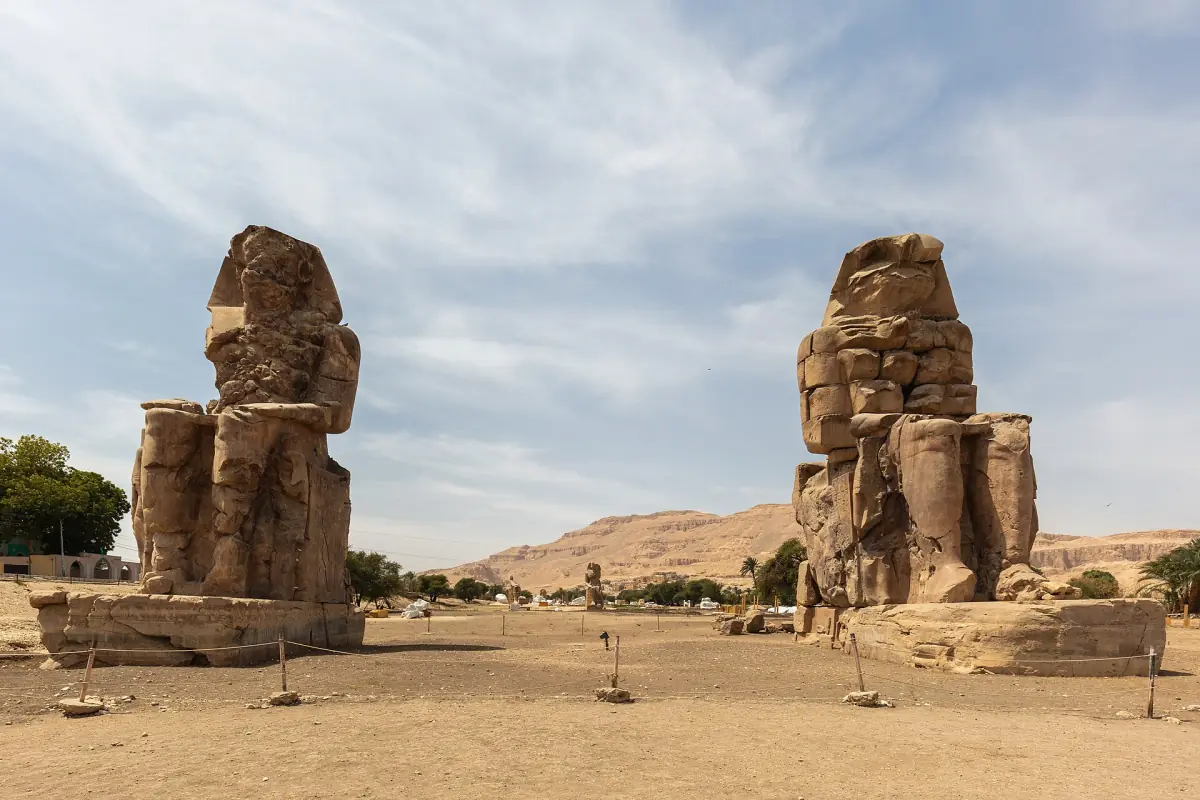
History of the colossi
The colossi are part of the Theban monument landscape that UNESCO listed in 1979. That listing is a heritage status, not a shared entrance ticket, so each paid site on the West Bank has its own fee.
Amenhotep III is also the builder of the core of Luxor Temple, which makes the West Bank statues and the East Bank temple two ends of one reign. If you plan to see both, the page on Luxor Temple covers tickets and evening visits.
For a first visit, treat the colossi as a landmark on a longer West Bank route rather than a full-day destination. They are most useful as a photo stop, and they pair naturally with the large sites listed further down this page.
Our picks: Colossi of Memnon
West Bank tours that can be combined with the colossi.
Hand-picked tours, booked through GetYourGuide. Prices are indicative starting prices in US dollars (as of October 2026). Tap a tour for live availability and the current price in your currency.
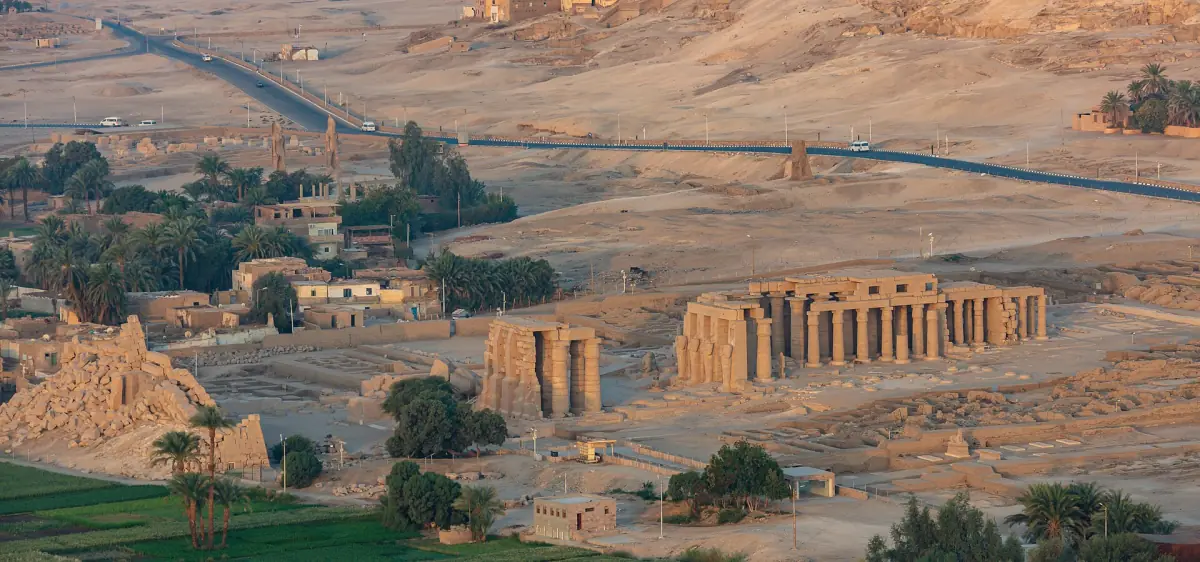
Private full-day tour of both Nile banks
A private Egyptologist, lunch and a transfer from an East Bank hotel. Entrance tickets are included only with the matching option, not in the base price.
Check availability →West Bank tour with entrance fees and lunch
Hotel transfer, private transport, a guide, lunch and the regular entrance fees are included. Additional tombs cost $10 each, tips are extra.
Check availability →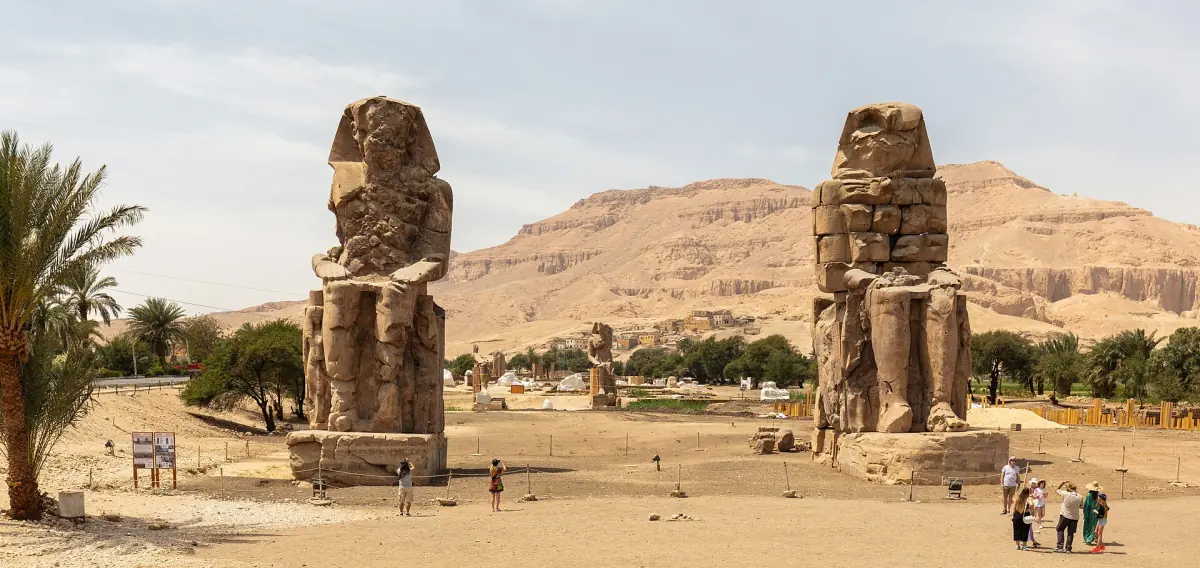
Private full-day West Bank tour
Air-conditioned transport, a guide, lunch and water are included. All entrance tickets are extra and bought on site.
Check availability →West Bank tours with the Colossi of Memnon
Guided West Bank days that combine the colossi with tombs and temples, with live prices and availability.
Getting to the colossi
The West Bank lies across the Nile from the main hotel area. One travel source describes the usual way: cross by ferry, then continue by taxi. The public ferry is listed in a tourism brochure as running from 06:00 to 23:00, but that brochure is undated, so check the current timetable. Reported fares range from about 5 to 25 EGP, and sources disagree on exactly where the landing is, so ask before you board.
A bridge about 12 km (7.5 mi) south of the city is the road alternative. If you book a driver or a guided tour, the colossi are usually just one stop on the route and transport is arranged for you.
Stay behind barriers and ropes. The same source warns that areas of the active excavation may be closed, and a barrier is never an invitation to step over it.
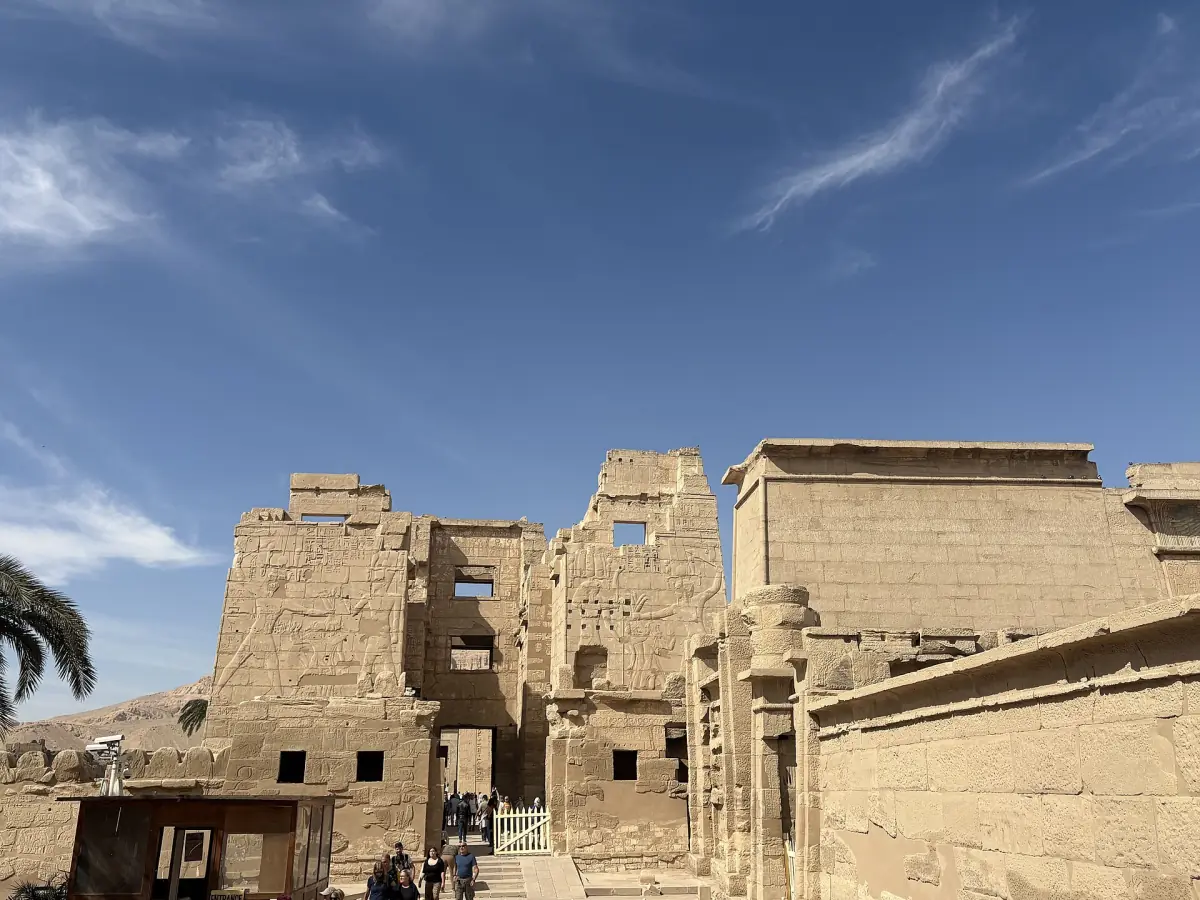
Nearby West Bank sites and 2026 prices
Foreign adult and student prices in EGP as listed in 2026, for a single visit without guide or transport. Sites differ in their rules, so check each one on the day.
| Site | Adult | Student | Hours |
|---|---|---|---|
| Valley of the Kings (3 regular tombs) | 750 | 375 | 06:00–17:00 |
| Hatshepsut Temple | 440 | 220 | 06:00–17:00 |
| Medinet Habu | 220–230 | 110 | 06:00–17:00 |
| Ramesseum | 220 | 110 | 06:00–17:00 |
| Deir el-Medina | 220 | 110 | – |
| Valley of the Queens | 220 | 110 | From 06:00, last entry 16:00–17:00 |
Medinet Habu appears at 230 EGP on one listing and 220 EGP on another, so expect either at the gate. Special tombs such as Tutankhamun (700 EGP for adults) cost extra on top of the Valley of the Kings ticket. Students need a valid ID and must be 24 or younger, and children under 6 enter free at the sites where this is listed. As a sample, the Valley of the Kings plus Hatshepsut Temple comes to 1,190 EGP for an adult, before any extras. Details are on the pages for the Valley of the Kings and the Hatshepsut Temple.
New in December 2025: reconstructed alabaster colossi
In December 2025 the Associated Press reported the presentation of two reconstructed alabaster colossi of Amenhotep III in the temple complex. This does not mean the roadside statues were only now discovered. The familiar pair has long been known, and the news concerns separate, reconstructed figures.
Do not plan around seeing the new statues. Treat the roadside view as the main visit and ask your driver or guide on the day whether any other area is open.
Heat, light and practical tips
Summer is hot on the West Bank. Long-term averages for Luxor (1981–2010, not a forecast) put June to August daytime highs above 106°F (41°C), against 73°F (23°C) in January. Go early in summer and bring water and a hat. The weather page has the full table: Luxor weather and best time to visit.
- Personal, non-commercial photos are allowed at archaeological sites, inside without flash. Professional lighting or tripod setups need a permit.
- Do not photograph military or state security buildings.
- Agree the price of a taxi or carriage before you get in, and decide in advance what is included.
Plan the rest of your Luxor trip
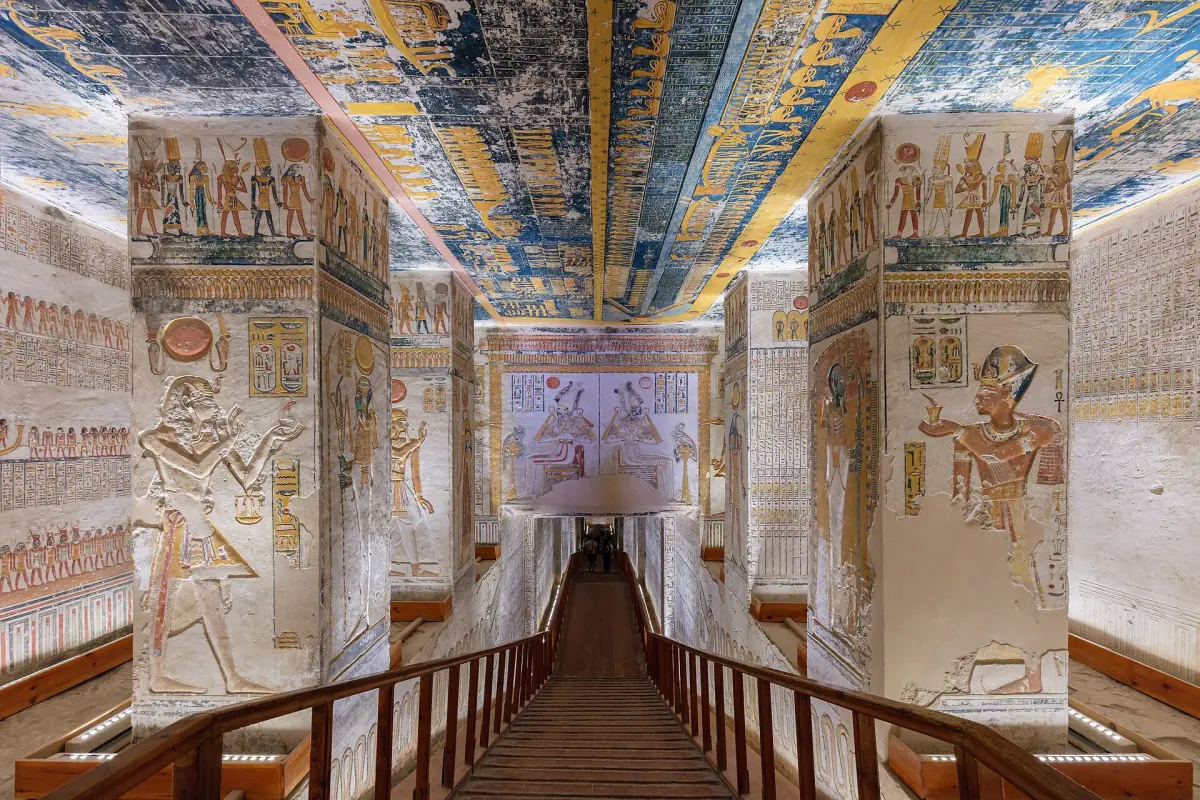
Valley of the Kings
Tickets, special tombs and rules for the royal tombs.
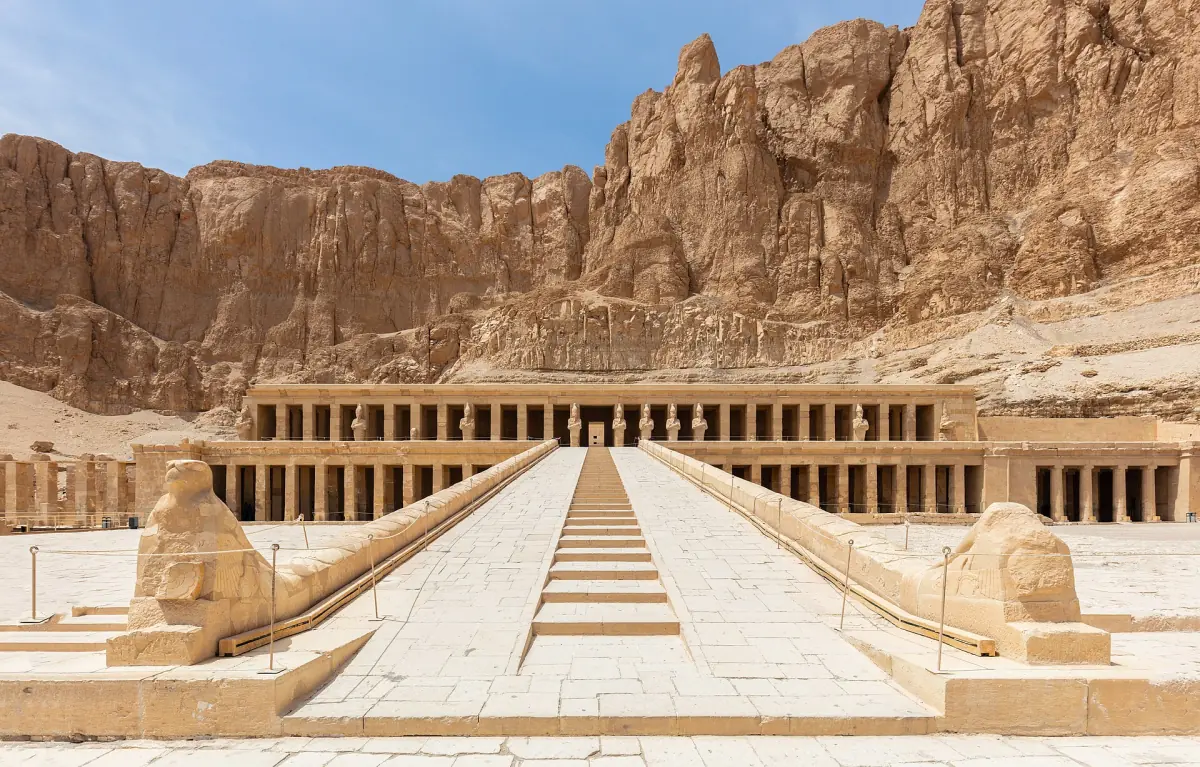
Hatshepsut Temple
Terraces under the cliffs of Deir el-Bahari, with prices and hours.
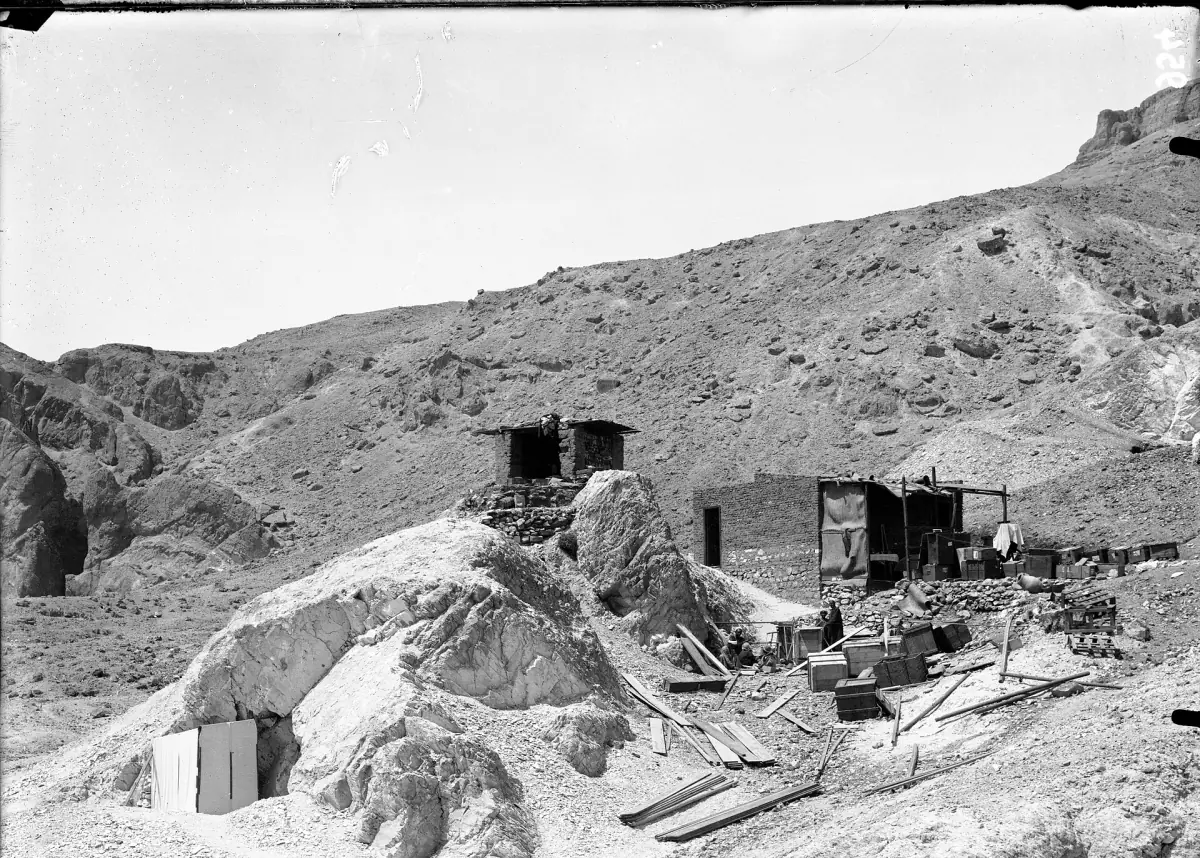
Valley of the Queens
Status of the Nefertari tomb and the ticket for the valley.
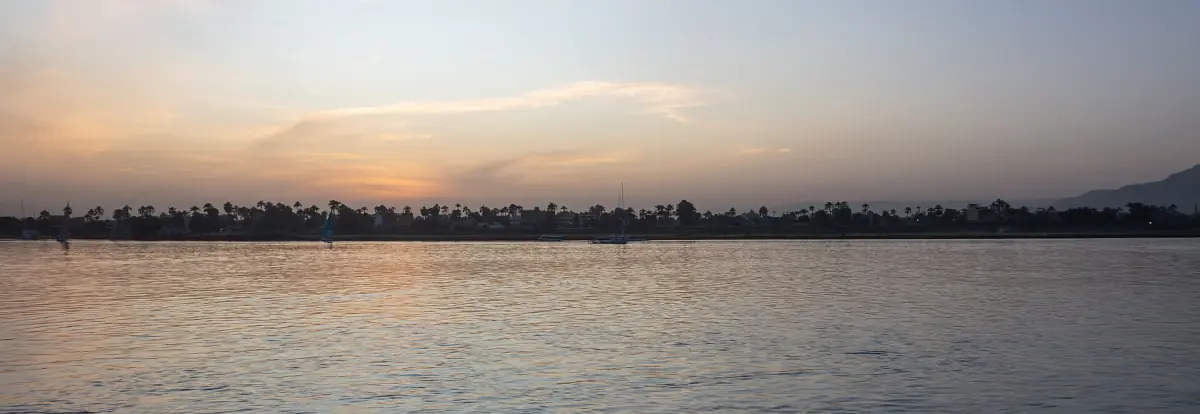
Getting to Luxor
Train, flight and road transfers, plus the ferry across the Nile.
Colossi of Memnon: frequently asked questions
Do I have to pay to see the Colossi of Memnon?
Viewing from the roadside area in front of the statues is reported to be free. That does not give you access to the whole excavation, and any other area can have its own rules.
Who do the Colossi of Memnon show?
The statues are attributed to Amenhotep III. They stand on the West Bank as part of the Theban monument landscape.
How do I get to the colossi from the East Bank?
One travel source describes crossing by ferry and continuing by taxi. A bridge about 12 km south of the city is the other way across. A guided tour takes care of both.
How much time do I need?
Because you view the statues from the roadside, a short stop is usually enough. Plan the rest of the day around bigger sites such as the Valley of the Kings or Hatshepsut Temple.
Can I walk behind the barriers?
No. Parts of the area belong to an active excavation and may be closed. Stay on the open side of any barrier.
Are the new alabaster statues the same as the Colossi of Memnon?
No. In December 2025 two reconstructed alabaster colossi of Amenhotep III were presented in the temple complex. They are separate from the long-known pair at the roadside.